Friday, 28 August 2015

Bash For iOS Makes It Easy To Organize Hangouts With Friends

By 06:36
 

A group of high school friends, now UC Berkeley engineers, have created an app called Bash to make it easier for friends to organize hangouts, meetups and other events. Launching today on the App Store following a small beta test on the UC Berkeley campus, the idea with Bash is to offer a less cumbersome alternative to using text messages or emails to organize these sorts of activities by allowing users to post event details, invite others, comment and quickly RSVP while also keeping track of who’s attending an event, receive notifications about changes, and more.
Explains Bash co-founder Danish Shaik, the team behind Bash has been working together on various projects since the beginning of high school, including their TechCrunch SF 2013 Hackathon win with Spruce, a dictation service for online reading. Shaik says that as the team moved on to college, they found themselves messaging each other constantly in order to arrange get-togethers, but the process soon became frustrating.
“Rather than ending with a time and a place, those conversations ended with hundreds of unrelated messages and a confused group of friends,” says Shaik. “Messaging wasn’t made for organizing hangouts, so we built a platform that was.”
The app itself works something like a standalone version of Facebook Events, as it allows you to create an event with just a few taps, by filling out things like the event name, location, time, and description. To get started with the service, users sign up with their Facebook account information and then confirm their phone number via text.
For those who had already been invited to events via Bash before installing the app, their feed will automatically populate with their list of upcoming activities. In addition, to cater to its local crowd, Bash is launching today with a “Berkeley” tab aimed at those new students just starting school who want to invite friends to various “welcome week” activities.
Unlike some of its prior competitors, Bash also works with those who don’t have the app installed. In that case, event organizers can invite friends by text message, which will link out to the Bash web version. Here, friends can view the event details and RSVP without downloading the app.
However, for those who have the app on their phone, it’s even easier to respond – you just swipe on an incoming iOS push notification to indicate whether you’re “Not Going” or “Going” to the event in question.
While there have been a number of attempts in the past to make it easier to find or organize hangouts between friends by way of a dedicated mobile app, including apps like Wigo, Ketchuppp, Jigglist, Gather, Weotta, and more, there hasn’t been a breakout hit in this space beyond Facebook Events or perhaps Meetup.com for more public group activities. In fact, Facebook Events has grown so large – it now has 450 million users – that’s it’s said to be next in line to be broken out into its own standalone app, following Facebook’s similar moves to break out Messenger and Groups into their own apps.
That could prove challenging for a smaller startup like Bash, which will need to figure out a competitive advantage. In the future, that could be working to partner with other organizations through its “special activities” tab, like it’s doing now with Berkeley, for example. Or it could ditch the Facebook login requirement in order to offer users an alternative way to organize or join events outside of the large social network – something that could appeal to the college-age demographic which is gravitating toward private mobile messaging apps rather than the bigger, more public social networks like Facebook when it comes to communicating with friends.
Bash was built by Shaik along with Zuhayeer Musa and Jimmy Liu, while they attended school and during the summer, following their participation in UC Berkeley’s Foundry incubator on campus. The app was privately tested with 100 people on the UC Berkeley campus ahead of today’s official launch. The startup is currently bootstrapped and free to download from iTunes. An Android version is planned.
Read More...

LG’s 10-Inch G Pad II Sports An Enormous Battery And Other Improvements

By 06:36


LG is going all-in on battery life with the second version of its G Pad tablet that was just unveiled today. The device itself won’t surface in the flesh until the IFA electronics show next month in Berlin, but already we know one thing about it: its battery is huuuge.
The G Pad II measures in at 10.1 inches and is powered by a whopping 7, 400mAh battery. That’s the largest capacity on the tablet market, and is sure to keep the device’s 1920 x 1200 WUXGA display — another step up on the original G Pad — powered for a day or so of usage. Elsewhere, a 2.26GHz quad-core Snapdragon 800 processor from Qualcomm and 2GB RAM provide the engine, while Android 5.1.1 Lollipop is installed out of the box
The tablet includes a fairly average rear-facing five-megapixel camera and a two-megapixel camera on the front, while there’s 16GB of internal memory — which is expandable via a micro SD card for those keen on additional space. The company is also throwing some freebies from Microsoft: Office for Android and two years of 100GB OneDrive storage.
Price is probably where it counts most in the tablet and Android markets, and LG is keeping that quiet for the LG Pad until IFA kicks off on September 4. While it certainly isn’t as glamorous as the iPad, the device could be a useful workhorse, particularly for enterprise customers or those seeking a family tablet, assuming that the price is sweet enough.
Read More...

Mobile Exits Drop Below Investments For First Time Since 2015

By 06:35

It’s been party time for mobile, with massive growth and disruption helping VCs to raise huge funds, entrepreneurs to raise massive rounds, and valuations to skyrocket. With 89 mobile Internet unicorns now worth almost $1 trillion, it’s no surprise that folks from Silicon Valley to Shanghai are asking what’s going on with return on investment (ROI).
While there are many ways to measure ROI, let’s look at the ratio of exits to investments, the total amount invested and ROI across all 27 mobile sectors for the last five years.

The Downward Road Is Crowded

Exits to investments ratio
In early stage markets, more money is generally invested than comes back to investors. So, as expected, the ratio of exits (M&A + IPO) to investment for mobile Internet stayed below 1x through 2011. Exits began to heat up in 2012, with investors seeing more than 3.5x the money invested coming back by the end of 2013. The first half of 2014 also saw an almost 3x ratio.
The last four quarters saw the ratio of exits to investments plunge dramatically (note: this excludes the outlier Facebook/WhatsApp deal), falling below 1x in Q2 2015. In other words, less money came back to mobile investors than went in the last quarter. What’s going on?
“Be fearful when others are greedy. Be greedy when others are fearful.” — Warren Buffett
Investments
The global financial crisis took its toll, and despite iPhone-led exuberance, it took years before the investment community as a whole really understood mobile. Up to the first half of 2013, mobile Internet investment never got much above $2 billion a quarter, with the smartest risk-loving investors getting in on the ground floor.
Then everything changed, with mobile investments skyrocketing to a record $50 billion invested in the last 12 months. FOMO (Fear of Missing Out) has been a powerful motivator, with deal sizes and valuations going through the roof for the last two years.
Exits
The mobile Internet exit (M&A + IPO) market stayed in the low single-digit billions of dollars per quarter from 2011 to mid-2013. It took off in the second half of 2013, cresting at just over $25 billion by the middle of last year.
But then the market began to turn. Mobile IPOs started to dry up. While mobile M&A continued to grow until Q1 2015, it dropped dramatically in Q2, toward 2013 levels. Combined exits have now fallen steadily (excluding Facebook/WhatsApp) for two straight quarters, and are half what they were at their peak.
“No one remembers who climbed Mount Everest the second time.” — Na Nook
Return on Investment
“If you can return 3x on your portfolio before management fees and carry, you can deliver 2.25-2.5x net to your investors and over a ten year period (with an average investment duration of 5 years), that is an acceptable return to the LPs (18-20% IRR).” — Fred Wilson
As well as the 3x ROI Fred describes, let’s consider where the money has been invested and how much of it is locked up. Understanding investment scale (i.e., what’s important) and returns (i.e., what has been valuable) in the 27 sectors that make up mobile Internet shows where investors are happy and where they might be nervous.
Mobile messaging returned around 12x (or 3x without Facebook/WhatsApp), navigation 11x, games 6x, app store/distribution 5x, social networking and books 4x and photo and video 3x on the $15 billion invested in these sectors in the last five years. Investors here are very happy bunnies.
Mobile food and drink is in the 2x to 3x ROI range, with $4 billion invested. Then there are 10 sectors whose $40 billion invested returned in the 1x to 2x range since 2011. The largest is mobile advertising/marketing at $6 billion, plus education, entertainment, enterprise/B2B, tech, utilities, wearables, lifestyle, health and fitness and music.
Finally, eight sectors delivered less than 1x ROI, so less money returned to investors than they invested in the last five years. The largest pools of locked up cash are $20 billion in mobile travel/transport and $19 billion in mCommerce, as well as mobile weather, medical, sports, business, productivity and news.
Read More...

Cyanogen OS Lands On Two New Smartphones, Targeting EMEA

By 06:34


The Cyanogen flavor of open Android, which is pushing a more customizable version of Google’s mobile OS — helped along by some $115 million in funding in its coffers, including an $80 million round back in March — has landed on two new smartphones heading for Europe, the Middle East and Africa.
The handsets, which run v12.1 of Cyanogen, are made by a new, U.K.-based entrant into the smartphone making space, called Wileyfox, albeit the phones themselves are actually made in China — so as with other such online retail Android reseller efforts it’s mostly an exercise in branding, with a few customer service flourishes thrown on top to try to stand out (such as European-based call centers for after sales services, and a replacement screen service for a yearly fee).
Does the Western world need more Android phones? According to analyst Gartner, growth in the global smartphone market slowed in Q2 to its slowest rate since 2013. Meanwhile Android’s year-over-year growth was the lowest ever — as the dominant smartphone OS looks to have achieved its peak (with a global marketshare of around 82 per cent). So there wouldn’t appear to be a pressing consumer need for more new Android phones.
But if you are going to try and grab Android users in a hyper saturated smartphone market then offering competitively priced hardware with a software twist is the way to do it — and that’s what Wileyfox is aiming to do, going up against the likes of the OnePlus in Europe.
The 4G/LTE 5.5in full HD display Wileyfox Storm is priced at £199/€249, and has a Qualcomm Snapdragon 615 octa-core chipset, 3GB of RAM, 32GB ROM (user expandable), a 20MP rear lens and an 8MP front-facing lens, plus a 2,500mAh battery (non-removable). While the £129/€169 4G/LTE Wileyfox Swift has a 5in HD display, a Qualcomm Snapdragon 410 quad-core chipset, 2GB of RAM, 16GB ROM (user expandable), and a 13MP rear lens plus 5MP front facing camera. Both devices ship with all the usual Google Android services preloaded, including the Play Store.
As mobile users have become more tech savvy, and smartphones themselves have generally become more consistent in terms of UI experience, the opportunity for online-only phone brands to poach users — especially brands building on an established and familiar platform like Android — is arguably expanding, threatening the retail advantage of an Android giant like Samsung whose incentivized deals with carriers helped get its handsets into phone buyers’ hands for years via their network of retail shops.
And as (or if) more phone buyers feel comfortable buying online, brands like Wileyfox are waiting to woo them with affordably priced hardware — taking a leaf out of the Xiaomi smartphone upstart playbook. Whether they can convince people they need to replace their existing handset a bit quicker than they otherwise would remains to be seen. The core quality of modern smartphones is arguably putting the biggest breaks on market growth. An annual upgrade is certainly far less necessary than it was several years ago, with performance improvements now typically incremental.
As for Cyanogen, its financial backers include Chinese manufacturing giant Foxconn, which makes money by making more hardware. While earlier this year Cyanogen also bagged a partnership with mobile chipset maker Qualcomm, the latter also clearly hoping to eke more growth out of the Android mobile growth engine by supporting another flavor of the OS. These very large mobile industry entities are clearly incentivized to milk more money out of the Android cash cow — hence their support for Cyanogen’s alt Android approach, which is a bet that offering added customization to users also offers a way to grow Android usage in a more mature and confident (but saturated) mobile market.
Here’s how Wileyfox’s European CEO, Nick Muir, set out the company pitch in a statement today: “Our target customer values choice, security and reassurance. These savvy individuals do not want their data made available beyond their control. They want to be able to change the appearance of their screen, beyond just the wallpaper and lock-screen. They want efficient, personalised shortcuts and gestures. They want friendly, helpful 24/7 customer service. And above all they want great quality, premium handsets with the latest technology. Responsive, well-built, reliable, quick-charging handsets with great battery life. And that’s what Wileyfox is all about.”
Whether a user of Google’s services can really expect to have ‘control over the availability of their data’ is another question — but one which Wileyfox’s “savvy” customers aren’t, apparently, asking.
Read More...

Facebook’s New Moments App Now Automatically Creates Music Videos From Your Photos

By 06:33
Facebook’s New Moments App Now Automatically Creates Music Videos From Your Photos

Facebook the social network’s recently launched photo-sharing app that aims to address the problem of getting friends to send each other the photos they’ve been hoarding on their own phones, is expanding to video. The app received its first major update today since its mid-June debut, and will now automatically create a video of your shared photos which you can customize, personalize and share back to Facebook.
The added feature, will somewhat of a minor addition, could make the app more compelling for those who didn’t yet see the value in the photo-syncing option it previously offered. As Facebook Moment’s early adopters begin to share out their video creations to Facebook for others to see, their friends may be more inspired to try out the app for themselves.
With the update, Facebook Moments will automatically create a music video for any grouping of six or more photos. You can then tap this video in the app to customize it further by changing the included photos and selecting from about a dozen different background music options. When you’re finished making your optional edits to this video, one more tap will share the video directly to Facebook and tag the friend or friends with whom you’re already sharing those photos.
The option to automatically create a video from your shared photos also makes Facebook Moments competitive with similar services like Flipagram, or those automatically created animations that Google Photos provides through its “Assistant” feature, which also helpfully builds out stories and collages.
These sorts of automated options aren’t just fun diversions for consumers – they’re also practical tools that help people do more with our ever-growing pile of photos that are being snapped and stored thanks to the ubiquity of smartphones.
Facebook also benefits from making video-sharing easier for its users: Video has become one of the fastest-growing categories on the social network, with over 4 billion daily video views. This has allowed it to sell a wider range of video ads, which is why the network has been doubling down on video as of late with new features like improved video analytics, live streaming, “Watch Later” buttons, and changes to its News Feed to highlight the best videos.
It’s the latest app to emerge from Facebook’s Creative Labs initiative, which is also responsible for apps like Facebook Groups, Slingshot, Facebook Paper, Rooms, Mentions, and more. Some of Creative Labs’ efforts to date have fallen flat, but Moments may have potential. Anecdotally, I know it’s having some impact on Facebook users’ collective consciousness when I find that several of my non-tech friends have already installed it or are saying that they’ve been noticing that Facebook notifications about shared photos in Moments are becoming a more regular occurrence for them.
App Annie’s actual data, however, shows the app is maintaining a decent, if not stellar, ranking in the Photo & Video category on the iTunes App Store (No. 107 currently). That’s a fairly competitive category though, it’s worth noting. The app is doing better on Google Play, where it’s No. 19 in the Photography category at present. But, on both stores, its Overall ranking has declined since its launch which could be troublesome.
Screen Shot 2015-08-25 at 12.32.47 PM
That being said, while Moments may still be benefitting from its launch press and related momentum, the app is doing better than Facebook’s Creative Labs other efforts like Rooms and Slingshot, which no longer have a tracked rank on App Annie’s charts – meaning they’ve dropped below #1,500 in any category.
Moments is actually smartly solving one of the age-old challenges smartphone users have faced – you want to get a copy of photos your friend took, but they forget to send them. You then have to bug them to text you, email you, or AirDrop the photos the next time you see them. Facebook Moments makes it much easier, as it instead allows you to privately sync photos from your phone to others, and it uses a combination of date and time stamps, location as well  facial recognition to group photos into collections you can share.
The only thing it’s missing is an ability to share those photos with non-Facebook users like grandma and grandpa (i.e. via email), though this is a minor complaint.
The updated version of Facebook Moments with the video sharing feature is live now on the App Store, and will hit Google Play today. The app is also now available in most countries, says Facebook, and has been translated into 34 different languages.
Make a Movie with Moments- Nolan’s Summer from Facebook on Vimeo.
Read More...

Mapstr Maps Out The Next Steps For Its App That Keeps Track Of Your Favorite Places

By 06:33


French startup Mapstr just released version 1.0 of its nifty map app, but it’s already thinking about the next steps. The company just raised $800,000 from angel investors and is working on a set of new features for the coming months.
As a reminder, Mapstr is a bookmarking service for places. It’s a hybrid between a map app and a note-taking app, and it works really well if you want to keep track of your favorite places or add new places where you want to go.
You can add as many tags as you want to your bookmarks in order to filter them out later using the tag drawer (restaurant, sushi, cocktails, etc.). It’s also a great way to check opening hours, get a restaurant phone number and more.
I talked with Mapstr founder Sébastien Caron last week about what he wants to do with the app, and it seems like many people are already excited about version 1.0. Released last month, Mapstr already attracted 50,000 users who saved over 400,000 places.
One of the most important features of the last release is the ability to create a profile to sync your map and share some of your favorite places with your friends. When you add someone as a friend, you can see their public map and discover new places.
This is a hint of the company’s vision — Mapstr wants to leverage these bookmarks to help you discover new places. Here are a few of the upcoming features.
First, you’ll receive a notification when you’re near a place that you already saved so that you don’t forget about your bookmarks. Second, the company is working on the ability to add your photos to your places, so that you remember the menu of a restaurant and more. Third, the company is thinking about official maps. For instance, a magazine could create a map of its favorite new restaurants and Mapstr users could follow the map to get these places right inside the app.
Finally, the company is thinking about expanding to other platforms, such as Android and the Apple Watch. In other words, many things are in the pipeline, and today’s initial funding round will let the team experiment for a little while with new features and platforms.
Read More...

PredictSpring Helps Brands Embrace Mobile Shopping

By 06:31


Longtime Googler Nitin Mangtani (manager for a number of products including Google Shopping) has founded a startup of his own, PredictSpring, where he’s working to help brands and retailers get up-to-speed with mobile commerce.
To illustrate why PredictSpring is necessary, Mangtani pointed to numbers from comScore showing that while 60 percent of retail browsing happens on mobile devices, those devices only account for 15 percent of dollars spent.
“The experiences on mobile haven’t caught up with the consumer demand,” he said. “The consumer is ready to do commerce on mobile.”
To create those experiences, PredictSpring has created a mobile app development platform that allows businesses to create shopping-enabled apps without writing any code. Businesses using the platform include Cole Haan, Eddie Bauer, Bluefly and Woodcraft — even though Mangtani is only talking publicly about PredictSpring now, the first apps actually went live at the end of last year.
PredictSpring has also raised $2 million in funding from investors including fashion tycoon Silas Chou’s Novel TMT Group and Beanstalk Ventures.
Looking at the mobile commerce landscape, Mangtani said there have been a few great hits, like Uber, HotelTonight and Airbnb, but most shopping apps are just “a very thin layer of native code — the moment you click away from the homescreen, you’re redirected to the mobile site.”
On the other hand, apps created on the PredictSpring platform are supposed to be “100 percent native.” That’s important, Mangtani said,  because the big innovations in mobile have been on the app side, rather than on the mobile web. Sure, not every Cole Haan customer is going to download the Cole Haan app, but he argued that the most loyal ones and the biggest spenders will. So it’s important to give them a good experience, where it’s easy to actually buy things.
Still, PredictSpring’s strategy isn’t just about apps. The company is also launching a new Commerce Gateway, which should make it easier for companies to add shopping capabilities and “Buy buttons” to their online ads and social media posts — for example, Cole Haan isn’t just using PredictSpring to build its mobile apps, but also to support shopping directly from its Instagram feed. The Commerce Gateway is supposed to provide companies with a single API where they can integrate things like their e-commerce platform, inventory system, payment provider, product catalog and loyalty program.
Read More...

Rovio To Cut 260 Jobs As The Angry Birds Franchise Becomes Irrelevant

By 06:30


It looks like Angry Birds maker Rovio is having some troubles to pay the bills. The Finnish company is about to cut 260 jobs after reducing its workforce by 110 employees in October 2014. At the end of 2013, the company had 800 employees in total.
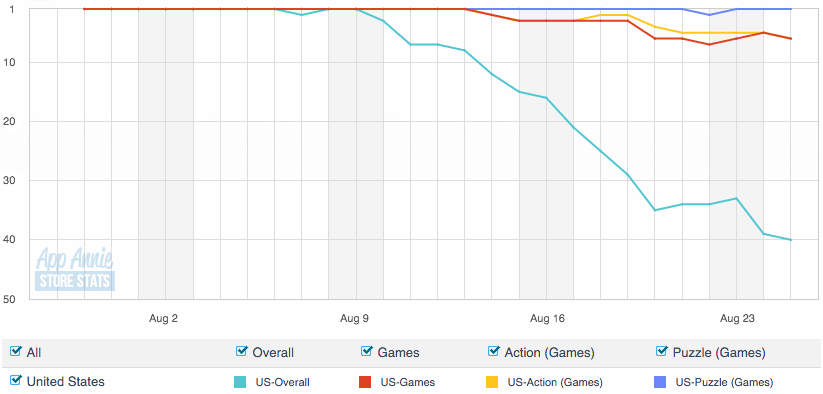
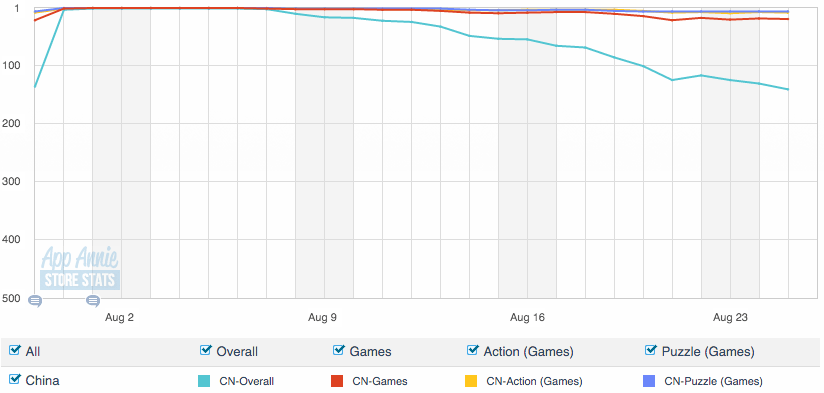
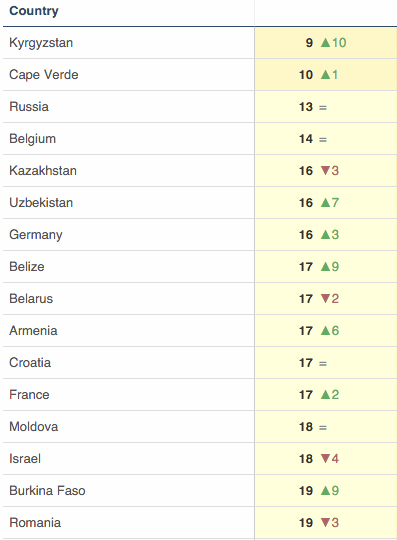
This news comes as a surprise as Rovio’s latest game is a big success. Angry Birds 2 has been downloaded nearly 50 million times in just a month, topping the charts…
  • In the U.S. (at least for a couple of weeks), one of the main App Store markets:
Screen Shot 2015-08-26 at 13.10.44
  • In China where the franchise is very successful:
Screen Shot 2015-08-26 at 12.55.13
  • In many other countries:
Screen Shot 2015-08-26 at 13.13.50
But generating millions of downloads is just part of the challenge. Angry Birds 2 is already falling in the charts around the world, and its freemium model doesn’t seem to be working great. In the U.S., Angry Birds 2 managed to reach the 42nd spot in the top grossing category shortly after its launch. While this is no small feat, it is nowhere near Game of War (#1), Clash of Clans (#2), Candy Crush Saga (#4) and Candy Crush Soda Saga (#7) — these games have been trusting the top grossing charts for months.
In other words, Angry Birds 2 is probably not enough to pay hundreds of employees. Rovio has offices in Espoo, Stockholm, London, New York, Los Angeles, Vancouver, Shanghai, Seoul and Tokyo — this isn’t your average indie game development shop.
The Angry Birds franchise has been one of the first breakthrough gaming successes on the App Store and Play Store. Millions of people paid a few dollars to download the latest iteration in the franchise. Yet, it’s a brand new world for mobile gaming. Now it’s all about free-to-play games, micro transactions and waiting times. Angry Birds wasn’t designed for this model.
Rovio also has a strong merchandise business — the company has been licensing its brands to sell a ton of Angry Birds teddy bears, notebooks and pens. But as the game franchise becomes less popular, these items could become irrelevant as well.
There is one last hope for Rovio — The Angry Birds Movie. The company has been working on a movie for a while now, expecting to release it in May 2016. Rovio said that the job cuts will affect the entire organization, except the teams working on the movie in the U.S. and Canada. Focusing the company’s budget and energy on this movie is a big bet, and it will determine the fate of the gaming company.
Read More...

Contrary To Reports, Android Pay Not Launching This Week

By 06:26

Android Pay, Google’s forthcoming payments platform and rival to Apple Pay, will soon launch, allowing consumers to pay using their Android smartphones at point-of-sale as well as make purchases within mobile applications. However, according to sources familiar with Google’s plans, Android Pay is not arriving today – or any time this week, in fact – despite a handful of reports and leaks from participating merchants which seemed to indicate otherwise.
As you may recall, Android Police recently uncovered a notice to employees at Android Pay partner McDonald’s which indicated that the restaurant’s customers could begin using Android Pay on Wednesday, August 26. A second McDonald’s memo was also posted to Reddit, again referencing the August 26 launch date.
Even though there were multiple sources for the McDonald’s leak, some questioned the accuracy of those reports, given that both notices also incorrectly listed the launch date for Samsung Pay as being August 21 – when Samsung itself has said its own payments platform will launch in September in the U.S. (It did, technically, launch August 20 but only in Korea.)
However, the launch time frame began to look more legitimate when Subway – another Android Pay partner – began emailing its customers to let them know that Android Pay was live. According to Consumerist, which got a copy of the Subway FreshBuzz email newsletter from a reader, the fast food chain yesterday proclaimed that “Android Pay Is Now At Subway!” The email even linked to the Android Pay website, even though that site continues to say the platform is “coming soon.” (Google is not commenting on the leaks.)
Clearly, Android Pay’s launch is imminent, as retailers have been posting placards, signs and placing stickers on their payment terminals for some time. But they may have jumped the gun on the “official” go-live date for Android Pay.
pay-1600
In case you missed it, Android Pay was announced this spring at Mobile World Congress, then further detailed at Google’s annual I/O developer conference in May.
The new payments platform will effectively pick up where Google Wallet left off by allowing consumers to tap and pay using their smartphone at local stores, while also offering a developer API for digital payments. (Confusingly, Google didn’t close down Google Wallet following the news of Android Pay. Google Wallet instead was re-introduced as a peer-to-peer payments app like Venmo or Square Cash.)
Similar to Apple Pay, Android Pay’s contactless payment solution utilizes NFC and tokenization technologies, but only requires users unlock their phone to authorize a transaction – that is, it doesn’t require biometric input, though that’s supported on newer devices that have a fingerprint reader. It will work on Android devices that run KitKat and higher, which also have an NFC chip. And unlike Google’s previous attempts at mobile payments, this time it’s working with the mobile carriers, including AT&T, Verizon (disclosure: TechCrunch parent AOL is owned by Verizon), and T-Mobile.
While not yet live, the Android Pay website offers a host of information about how and where the technology will work when it launches. Consumers will be able to use their credit or debit cards including Visa, MasterCard, Discover and American Express, at a wide variety of merchants, like Best Buy, Gamestop, McDonald’s, Macy’s, Whole Foods, and more. Apps such as Groupon, GrubHub, OpenTable, Lyft, Uber and many more will also support Android Pay, the site indicates.
Update: Google hints that Android Pay is coming soon with a new tweet that simply says to stay tuned.
Read More...

Yahoo Announces New Tumblr Sharing Tools And Native Video Ads For Developers

By 06:26
Simon Khalaf, Yahoo’s senior vice president of publisher products, today outlined some big shifts in the mobile ecosystem and unveiled some new tools for mobile developers. He made the announcements on-stage at the Yahoo Mobile Developer Conference in New York City and in related blog posts.
Let’s start with the developer tools. The first one is Tumblr In-App Sharing. Basically, it’s a Tumblr share button, but for mobile apps rather than websites. The launch partner for this is mobile photo editor PicsArt — so users can now share the photos and collages that they’ve created in PicsArt, directly from the app into Tumblr.
Khalaf noted that this should drive traffic back to PicsArt, because the Tumblr posts will either deeplink to PicsArt (if the user already has the app installed) or include a link to download. (As a result, Khalaf said the traditional blue link is “out, completely gone.”) Developers will also get to see how often their shared content gets reblogged, clinked on or liked.
Other new tools include real-time analytics for developers using Flurry (Khalaf joined Yahoo through the acquisition of Flurry), with data automatically updating every 15 seconds. And Yahoo said it will now help mobile developers integrate native video ads into their apps.
Flurry app time
As for Khalaf’s comments about the broader landscape, he pointed to enormous growth in mobile usage, both to crow about Flurry (which he said is integrated with 720,000 apps reaching 2 billion devices — so it, uh, “beats the distribution of clean water”) and to talk about the bigger media opportunity. After all, he said average daily usage on mobile has increased from 162 to 220 minutes in 2015. The time spent in the mobile browser is a rapidly shrinking part of that pie, with more than 90 percent of time spent in apps. And media consumption (if you include the media consumption in social media and messaging apps) accounts for more than half of that app time.
Oh, and people are spending money, too. Flurry projects that in 2015, revenue from in-app purchases will grow to $33 billion, outpacing the projected $31 billion of mobile ad revenue. In other words, contrary to the fears of the media industry, people are actually willing to spend money on mobile content. That tied into Khalaf final point, that it’s time for the television industry to “cut the cord on your end before the consumer cuts the cord on their end.”
“There’s a very simple way to do it: Liberate your content,” he said. “Don’t keep it shackled by the cable industry after 20 years of horrible consumer service. Let your content out. It’s being paid for.”
Read More...

Apple Patents Earbuds With Noise-Canceling Sensor Smarts

By 06:24


Apple continues looking at ways to improve its earbuds — including potentially ditching the iconic white cables which had such a starring role in iTunes ads, back in the day.
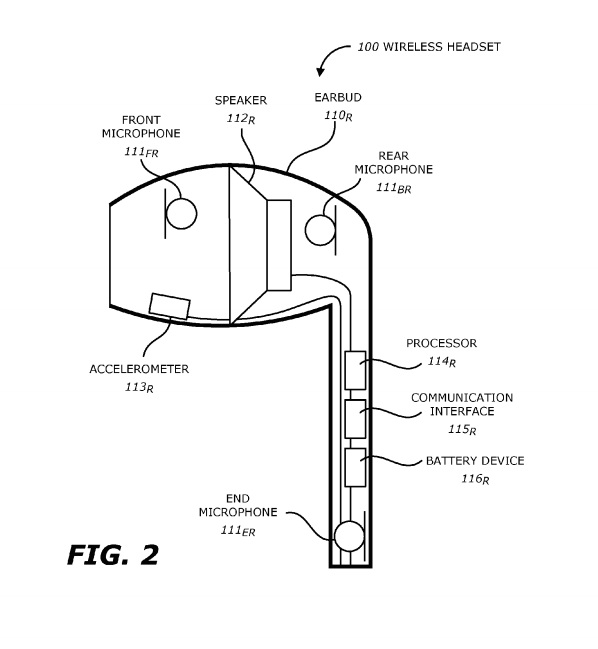
According a patent filed in February last year but published this week and spotted by AppleInsider, Cupertino is looking at making wireless earbuds that also incorporate bone-conduction technology in order to improve voice communications. The patent also describes deploying a range of other sensors — such as internal microphones and accelerometers — to better detect external noise to boost noise-canceling capabilities and enhance the in-ear audio experience.
The patent application, entitled “System and method of improving voice quality in a wireless headset with untethered earbuds of a mobile device,” details various configurations of in-earbud sensors for enhancing noise-canceling technology.
Inertial sensors are used to detect vibrations in the user’s vocal chords, via the vibrations of the bones and tissues of their head, while internal microphones and processors detect wind levels and external noise. The multi-sensor configurations then utilize a combination of these wind/noise and voice signals to determine how to tweak audio levels to improve overall audio quality.
It’s not the first earbud-related bone conduction patent from Apple. The company filed a very similar patent back in March 2013 (which we covered last year) — albeit it’s yet to bring an implementation of the technology to the earbuds it ships with iOS devices.
Apple frequently files patents relating to earbuds, including another sensor-packed variant last year for power-efficient noise canceling; a variant with beamforming mics that can redirect towards the source of a user’s voice; earbuds with built-in activity, health and fitness trackers; and a set of earbuds that can automatically detect when it’s being shared by two users and switch between stereo and mono sounds to allow two users to hear two different audio streams.
Given its business’ continued core focus on music, including the $3 billion acquisition of the Beats brand last year, it’s hardly surprising Apple is a little obsessive about seeking out new ways to tweak its primary audio delivery mechanism (aka its EarPods).
What’s perhaps more surprising is how (relatively) little the earbuds Apple ships with its mobile devices have changed over the years, despite all its inventive whiteboarding. But given how many earbud patents are floating around now it surely can’t be long before some of these sensor-based smarts find their way into iOS users’ ears.
Read More...

Why Angry Birds Games Aren’t Enough For Rovio

By 06:24


Earlier today, Rovio said it would lay off 260 employees. This was fascinating news to the Internet, given Rovio’s status as one of the vanguards of mobile gaming as the iPhone and Android exploded.
But in reality, all games eventually fade into obscurity, and even viral phenomenons like Kim Kardashian: Hollywood, Candy Crush Saga and FarmVille become distant memories among the fickle gaming population. Most gaming companies that ride the strength of a massive hit will experience a decline — it just depends on at what speed. Those companies and game developers need to figure out a second act.
screen-shot-2015-08-26-at-13-10-44
The App Store rankings for Angry Birds 2

But first, let’s talk mechanics. The success and longevity of most games depends on a couple of factors, including virality, monetization and short- and long-term retention. The last one is arguably the most tricky, because it’s harder to ensure. However, long-term retention drives the longevity of a game and determines whether it has staying power that it can leverage into a platform to drive adoption for other games — and please investors with dividends and stock payouts.
Take Candy Crush Saga from King.com, for example. Still among the top-10 grossing games on the App Store, Candy Crush Saga nails the viral component of game development. To monetize its games, King created a viral loop that encourages players to purchase upgrades at just the right moment to finish off a level. And it continued coming out with new levels, driving long-term retention. Candy Crush Saga was so successful it created a multibillion dollar public company that has spawned money-making titles like Candy Crush Soda Saga.
Games like Candy Crush Saga come down to how much content is available in the game, and the most avid players tend to blitz through that content quickly. Like Candy Crush Saga, Kim Kardashian: Hollywood supported itself with a strong brand — in this case, basing the game around a superstar — but it still requires developers to churn out new content to encourage retention.
For more in-depth and challenge-driven games — in the industry, these are referred to as “midcore” — the long-term retention is centered around user-generated content (UGC). In the case of Clash of Clans, UGC is built around creating and raiding bases. Each moment of attack and defense is a new element of user-generated content in the same way that every player-versus-player encounter in World of Warcraft is.
Screen Shot 2015-08-26 at 10.58.24 AM
And then there’s Game of War, which has been able to create a brand for itself beyond just being a video game. It ran a promotional campaign ranging from app install ads to campaigns that are centered around Kate Upton, which has made it consistently one of the top-grossing apps on the App Store. The company’s combination is not only a mid-core title, but a strong brand behind that title that everyone is aware of. Supercell, the maker of Clash of Clans, also runs TV spots for its games, building that brand.
Screen Shot 2015-08-26 at 11.04.06 AM
These games are still in their prime and continue to have massive staying power, while recent Angry Birds games tend to be one-offs. They are launched with a boatload of content that are well-designed, but players blitz through the games quickly and their popularity — and success on the App Store — quickly fades. Diminishing returns for Angry Birds games, driven by the insane popularity of the original game, has essentially started to kick in and the company needs to figure out its next steps.
To be sure, new Angry Birds games aren’t complete failures when it comes to making money, but they aren’t a second act that replicates the worldwide phenomenon of the original Angry Birds. As my colleague Romain Dillet pointed out, Angry Birds 2 was for all intents and purposes a success in the eyes of the App Store.
Screen Shot 2015-08-26 at 12.06.37 PM
But for a company like Rovio, which has built a massive brand around Angry Birds with toys and cartoons (and even a movie), the trick is to ensure Angry Birds turns into a multi-faceted franchise that creates a viral phenomenon beyond just a video game.
A case in point is Minecraft, one of the most successful games of all time. But it wasn’t just a game — there were conventions, toys, and a whole lot of other branding elements. Rovio may have to lay people off, but it also has to focus on being as much a brand as it is a games developer.
King has been trying to find its follow-up act by creating sequels and new games, but so far it hasn’t been able to replicate the incredible viral success of Candy Crush Saga. It has already begun to see a decline in its business as it moves to diversify beyond Candy Crush Saga. Games like Pet Rescue Saga and Candy Crush Soda Saga haven’t been enough to help it continue to build a strong business, so it has started to not only slow, but reverse its growth.
Screen Shot 2015-08-26 at 10.49.04 AM
This is essentially a fate that most gaming companies searching for their second viral act will eventually experience. Zynga, for example, has shown lackluster performance since its massive Facebook hits and is now reorienting itself around its strengths, Zynga Poker and slots games. Still, it’s been unable to hold off its user exodus.
To become that entertainment brand that Minecraft succeeded in making and Rovio has been hard at work building, the company needs to retool and set different expectations for itself. It’s the difference between finding a future beyond a hit game, and milking its existing games into obscurity — paying out dividends as it rides off into the sunset.
As for Rovio, its second act has yet to be written — and simply making new games, as emphasized by the company’s retooling today, may not be enough to find that next step. If it is to succeed, it needs to find a way to make the company itself a viral hit and not just its games.
Read More...

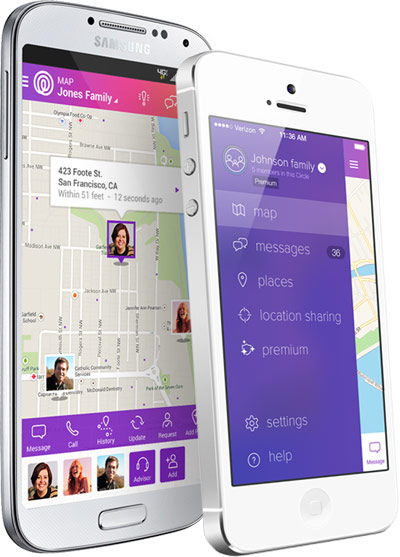
Life360 Acquires Chronos To Add “Quantified Self” Tracking To Its Family Locator App

By 06:23


Life360, the maker of mobile applications for iOS, Android and Windows Phone that help keep families connected, has acquired Chronos Mobile Technologies, a startup behind a number of mobile apps that passively collect data from users’ smartphones in order to highlight trends and connections between various behaviors. Terms of the deal were not disclosed, but Chronos had closed on a small seed round from Maven Ventures, Draper Associates and Major League Baseball earlier in 2015.
Chronos first made its debut at TechCrunch Disrupt SF 2012 with a simple time-tracking application of the same name designed by Stanford Business School grads Charlie Kubal, formerly of Pandora and Google, and Dylan Keil, previously a mechanical engineer.
The app itself was then designed to appeal to “quantified self” enthusiasts, who wanted an easier way to gather data about their activities, including things like how long they were at work, how long they slept, how much time they spent commuting, and more.
A later release allowed users to automatically track whether they reached certain goals, like spending a certain amount of time of the gym, or spending more time with family, for example.
Screen Shot 2015-08-27 at 11.05.49 AMIn the years following the launch of its flagship app, Chronos added to its collection of apps to also include Waldo, an app that automatically alerted friends to your whereabouts; Tip Top (beta), which helps you find the best spots around the world as determined by friends and experts; and Steps + Sleep, which more narrowly focused on tracking those two health-related activities.
Given Life360’s focus on tracking family members and their daily activities, it’s easy to see why the company was interested in Chronos’ technology.
According to Life360 co-founder and President Alex Haro, the two companies became connected with one another as both were a part of the StartX network, though Life360 was aware of Chronos for some time.
“Their contextual-awareness technology and work on using passively-collected data to connect close circles is really closely aligned with our mission at Life360,” explains Haro. “The power of this is to eventually create new form of passive communication for families.”
One potential use case for Chronos’ technology within Life360 is with its alerting feature. Today, the company’s active users receive on average over 159 Place alerts per month (alerts received when family members leave or arrive at important places like work, home, school, etc.) By integrating a contextual awareness engine into this system, Life360 could make its alerting feature smarter, doing things like asking users to share photos while on a trip, or setting reminders for tasks like picking up milk when one family member leaves the office, while also informing the user the ETA to their next destination.
Haro says it was the IP and Chronos’ contextual awareness technology that first attracted Life360’s interest, but he’s also excited to bring on the two Chronos founders as part of the acquisition. The founders will join full-time to help run Life360’s location and context team.
“They’ve spent a lot of time thinking about a lot of the same things that we’re focused on: the future of location sharing, how can contextual awareness improve your connection the people you care most about,” notes Haro.
More importantly, perhaps, is the the tech that Chronos built was designed to be very efficient – though it’s using a lot of the phone’s sensors, it does so without rapidly draining the battery. That’s a challenge that Life360 can relate to and understand. In addition, Chronos’ contextual engine gets smarter over time by learning from user behaviors.
“The opportunity to bring in industry-leading context and location technology is very compelling to us,” says Haro. “A majority of what they’ve done was on our product roadmap, but buying Chronos allows us to get there more quickly.”
Following the deal, which was a combination of both cash and stock, Chronos will continue to operate its standalone products up until the point that the Chronos technology is integrated into Life360, whose app today is used by 50 million families. At that point, current Chronos users will be transitioned to the Life360 app instead.
Once inside Life360, the Chronos technology will offer users more insight into their family’s day-to-day activities – letting them see where they each spend their time, and what they’ve been up to.
It’s arguable that some family members may not appreciate this level of detail and scrutiny, but Life360’s current product has respected user privacy in the past by offering flexible location sharing combined with automated Place alerts for everyday check-ins. The added technology will just add another layer of data on top of the basics already provided, which should make Life360 feel more like a “quantified self” app than the tracking and messaging utility it is today.
Read More...

Direct Messenger Is An Unofficial Twitter DM App

By 06:22

I can’t wait to see @alex crying tears of joy when Twitter finally releases a standalone Twitter DM app. This day hasn’t come yet, but it doesn’t mean that third-party developers aren’t already working on it. Meet Direct Messenger, an unofficial iOS messaging app for Twitter DM. This app packs a couple of nifty features, but also shows why we seriously need an official Twitter DM app.
Direct Messenger isn’t yet another Twitter client for iOS. It only does one thing — sending and receiving direct messages. When you open the app, you get a list of your last private conversations. The conversation screen is reminiscent of Facebook Messenger. Right above your keyboard, there are a few shortcuts to add other types of content to your messages.
You can send a photo, your location, stickers and voice recordings. All of this is great, but Twitter doesn’t support most of these message formats. For instance, when you send your location through Direct Messenger, the app takes a screenshot of your current location on a map, uploads it to Amazon S3 and sends a link to your recipient. It doesn’t look native at all for your recipients if they aren’t using Direct Messenger.
The same thing is true for stickers and even photos — Direct Messenger doesn’t support native photo attachments. If you are using Direct Messenger, the app will automatically change these Amazon S3 URLs into the actual content. But chances are most of your friends aren’t using Direct Messenger.
If you read a message in the official Twitter app, Direct Messenger doesn’t mark it as read. Finally, due to API limitations as well, Direct Messenger doesn’t support group DMs.
Other than that, the app works as expected. It’s a great way to access your messages much more quickly — it’s clean and well designed. In other words, Direct Messenger is a nifty little proof of concept. The developer had to work around current API restrictions and has done a great job to make it as seamless as possible. Twitter is responsible of the shortcomings listed above, not Direct Messenger.
For all these reasons, I can’t help but think that Twitter needs to work on a Twitter DM app. Many recent updates indicate a renewed commitment to direct messages, but there is no sign of a dedicated mobile app just yet. DMs don’t carry the 140-character limit anymore, you can make group conversations, send photos and videos, quote tweets and more.
If only Twitter could stop tweaking the colors of its main app and build a messaging app, that could be a great. Heavy Twitter users have only been waiting for this hypothetical app for years.
Read More...

Workflow Lets You Put Shortcuts To Frequent Actions Right In iOS’ Notification Center

By 06:21

Workflow, the clever if somewhat geeky app aimed at iOS power users that helps you automate frequent tasks you perform on your iPhone or tablet, like ordering an Uber to your next event, making a GIF from your photos, creating reminders that alert you when you arrive at a particular destination, playing a favorite album, and much more, is out this morning with a notable update.
The app now offers a Today Widget for iOS devices that makes it even easier and quicker to run your workflows. Instead of launching the Workflow app, you can now kick off your automations just by pulling down on the Notification Center and tapping on the item you want to run.
This powerful feature wouldn’t have been possible before Apple relaxed its rules around how its Today Widgets operate. As you may recall, Apple initially hesitated to allow widgets that launched other apps installed on your phone, having once banned a popular newcomer to the space called Launcher from its App Store, much to users’ dismay.
But the company later changed course this spring, and allowed Launcher back in. That set a precedent for developers who wanted to build other widgets capable of launching apps, like Workflow now does with its own widget.
Similar to the automations users built within the app previously, the updated version lets you quickly drag-and-drop items from a list of suggested actions to build your own Today Widget workflow, or browse through a gallery of pre-built workflows to get ideas. There, you’ll find a special “Today Widget” section that helps you discover useful shortcuts ranging from utilities (like “pizza assistant” or “directions to next event”), to quick actions (speed dial, play a playlist, etc.) to sharing or health-related shortcuts (log a run or your weight) and others.
IMG_5815
After clicking the “get workflow” button or building a workflow of your own, your new Today Widget automations can be launched with a tap right from iOS’ Notification Center. Arguably, this is now Workflow’s killer feature – before, the app could get buried on your iPhone’s back screen where it was forgotten about, but having its own widget could turn it into something you use daily.
Despite seeming like something that may only appeal to a niche crowd of passionate, power users, Workflow is doing fairly well for a mobile application priced at $4.99. According to Ari Weinstein, a co-founder at DeskConnect, the company behind Workflow, the app has hundreds of thousands of users.
The company is also profitable, he tells us, even though it hasn’t raised money. (“Though we are considering it,” he notes.)
IMG_5895
Along with widget support, the updated app also introduces a number of new actions, including several health-related actions, a few network-related actions (e.g. get your IP address or network details), and more. Plus, several current actions have been improved – for instance, you can now output high-res photos, send video or audio in WhatsApp, tweet videos, or take photos without tapping the shutter, for example, among other things. In total, Workflow offers over 200 actions to choose from.
In addition, there’s a new “Workflow Sync” feature, which will automatically back up your workflows and sync them between devices.
Today’s launch follows the app’s recent update which introduced Apple Watch support, allowing you to run workflows right from your wrist. The new version of Workflow is rolling out to the iTunes App Store here.
Read More...

The Next iPhone May Come With Animated Wallpapers

By 06:20

It would appear that the next-gen iPhone may come with some added flare.
Sources told 9to5mac that the UI for the iPhone 6S may come with animated wallpapers, not unlike the animated watch faces that shipped with the Apple Watch.
apple-mickey
Those sources said that animated wallpapers could include animated fish in a koi pond, as well as ‘colorful arrays of smoke.’
Given that most Android lovers quote ‘customization’ as the source of their loyalty, it makes sense that Apple would offer even more options for users to differentiate their iPhones.
Last night, a photo was leaked of the iPhone 6S Plus packaging, which depicted a koi fish floating on a white box. Though the photo is generally sketchy and unreliable, 9to5Mac seems to believe that the picture is further evidence of the animated wallpapers rumor.
At the same time, 9to5Mac is hedging their bets saying “the animation features in testing could have ultimately been dropped from the final iPhone 6S launch.”
The next generation iPhones are expected to be unveiled at an Apple event on September 9.
Read More...